
Navigating the complexities of a 3-phase system requires a detailed understanding, and this guide serves as your initial step into mastering
the intricacies of a 3 Phase Air Compressor Pressure Switch Wiring Diagram, offering professional operating instructions.
Congratulations on acquiring this essential component; this manual will illuminate the path to successful operation, ensuring optimal performance and longevity.
What is a 3 Phase Air Compressor?
Three-phase air compressors represent a significant leap in power and efficiency compared to their single-phase counterparts, making them ideal for demanding industrial applications. These robust machines utilize a three-phase electrical supply, delivering consistent and substantial power to drive the compressor motor, enabling continuous operation and handling high air demands.
Unlike single-phase compressors, which experience pulsating power delivery, three-phase systems provide a smoother, more consistent power flow. This translates to reduced vibration, quieter operation, and extended equipment lifespan. They are commonly found in manufacturing plants, automotive shops, and other environments requiring a reliable and high-volume air source.
Understanding the electrical requirements is crucial; a three-phase power supply necessitates specific wiring configurations and safety protocols. Proper installation and maintenance, guided by a 3 Phase Air Compressor Pressure Switch Wiring Diagram, are paramount for safe and efficient operation. These diagrams detail the precise connections needed for optimal performance.
The Role of the Pressure Switch
The pressure switch is a critical safety and control component within a 3-phase air compressor system, acting as the brain that regulates operation based on air tank pressure. It automatically starts the compressor motor when the pressure drops below a pre-set cut-in point and shuts it off when the maximum cut-out pressure is reached, preventing over-pressurization and potential damage.
This automated control not only safeguards the compressor and connected equipment but also ensures energy efficiency by preventing unnecessary operation. A properly functioning pressure switch is essential for maintaining consistent air pressure and reliable performance. Referencing a 3 Phase Air Compressor Pressure Switch Wiring Diagram is vital for correct installation and troubleshooting;
Understanding the switch’s settings and wiring configuration, as detailed in the diagram, is paramount for safe and effective operation. Incorrect wiring can lead to compressor malfunction or even hazardous conditions, emphasizing the importance of accurate implementation.
Understanding the Wiring Diagram
Deciphering the 3 Phase Air Compressor Pressure Switch Wiring Diagram is crucial for successful installation and maintenance, unlocking the system’s operational logic.
Key Components in the Diagram
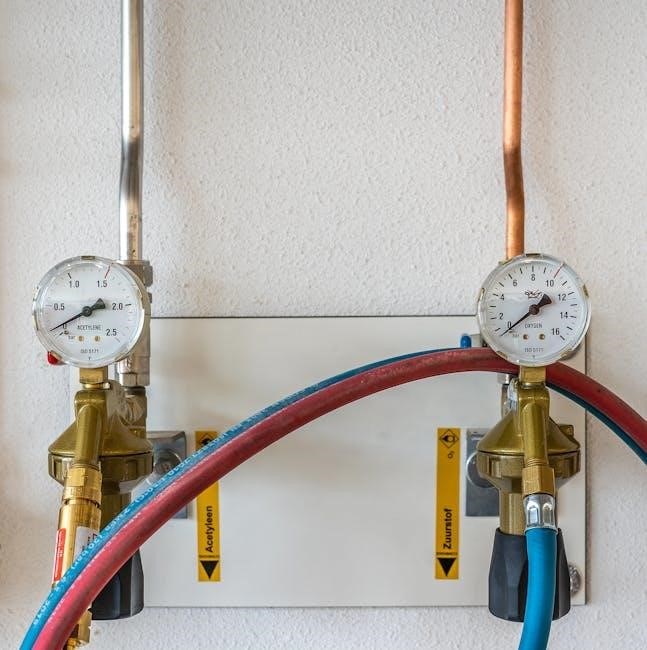
The wiring diagram prominently features the three-phase power supply, typically labeled with voltage and phase designations (e.g., 208-230V, L1, L2, L3). Understanding these inputs is paramount. Next, the pressure switch itself is central, showing its connection points for power, the compressor motor, and often an unloader valve.
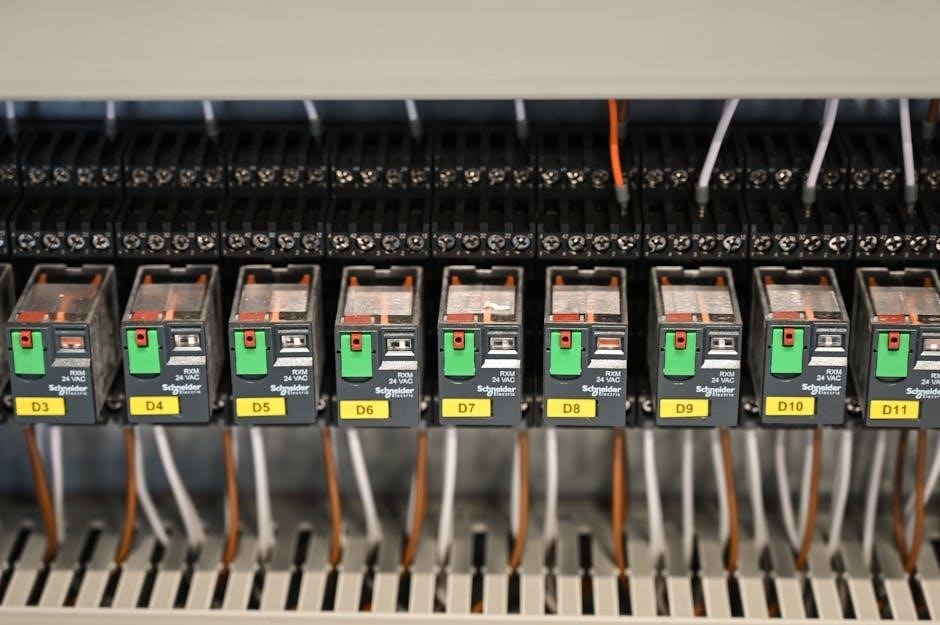
Crucially, the compressor motor is depicted, illustrating its winding connections (Delta or Wye) and starter coil wiring. The magnetic motor starter, a vital component, is shown with its coil, normally open (NO) and normally closed (NC) contacts. Overload relays, protecting the motor from damage, are also clearly indicated.
Furthermore, the diagram will showcase the unloader valve, if present, which temporarily releases pressure during motor starting. Control transformers may appear for voltage step-down, and disconnect switches are essential for safe isolation. Finally, grounding connections are vital for safety and are always clearly marked within the diagram.
Symbols and Their Meanings
Decoding a 3-phase wiring diagram hinges on understanding its symbols. A circle often represents a junction point, while straight lines denote conductors. Coils are depicted as zigzag patterns, and contacts (NO/NC) are shown as open or closed switches. Three-phase power is typically indicated with three sinusoidal waves.
The pressure switch itself has a unique symbol, often resembling a pressure gauge with electrical connections. Overload relays are shown as rectangular boxes with thermal symbols. Grounding is universally represented by three descending lines or an upside-down triangle. Transformers are illustrated with two coiled rectangles.
Pay close attention to terminal numbers and letter designations (T1, T2, T3, etc.) as they correspond to specific connection points. Dashed lines signify pilot circuits or control wiring. Familiarizing yourself with these symbols is crucial for accurate interpretation and safe wiring practices, ensuring a functional system.
Voltage and Phase Identification
Accurate voltage and phase identification are paramount before commencing any wiring. Three-phase systems utilize three alternating currents, each offset by 120 degrees. Common voltages include 208V, 230V, 460V, and 575V – verify your compressor’s requirements.
Phase identification is typically achieved using a multimeter. Labeling the wires (L1, L2, L3) is crucial for correct connection. Incorrect phasing can lead to motor reversal or damage. The neutral wire (if present) is often white or gray. Grounding wires are typically green or bare copper.
Refer to the wiring diagram’s voltage specifications and phase sequence. Double-check these values against your power supply. Using the wrong voltage can instantly destroy the compressor motor and pressure switch. Always prioritize safety and confirm all connections before energizing the system.

Types of 3 Phase Pressure Switches
Understanding the diverse range of 3-phase pressure switches – single, double cut-out/cut-in, and unloader types – is vital for selecting the correct component.
Single Cut-Out/Cut-In Switches
These represent the most basic configuration, controlling the compressor motor based on a single pressure setting for both starting (cut-in) and stopping (cut-out).
Typically, a single pole, double throw (SPDT) switch is utilized, offering a simple on/off control mechanism for the motor.
The switch maintains compressor operation until the pre-set maximum pressure is reached, at which point it cuts power to the motor. Conversely, when the pressure drops to the minimum setting, the switch restores power, initiating compressor operation.
Wiring these switches is relatively straightforward, often involving a direct connection to the three-phase power supply and the compressor motor starter.
However, careful attention to phase sequencing and proper grounding is crucial for safe and reliable operation. Refer to the specific wiring diagram for your model.
Double Cut-Out/Cut-In Switches
Unlike their single counterpart, double cut-out/cut-in switches employ two separate pressure settings for starting and stopping the compressor. This design offers more precise control and can enhance system efficiency by minimizing short-cycling.
These switches typically utilize two SPDT switches internally, one dedicated to the cut-out pressure (stopping the motor) and the other to the cut-in pressure (starting the motor). This allows for a wider differential between start and stop points.
Wiring these switches is slightly more complex than single switches, requiring connections for both cut-in and cut-out circuits. Always consult the specific wiring diagram provided with your pressure switch and compressor. Proper phase identification and secure connections are paramount for safe operation and preventing motor damage.
Unloader Switches
Unloader switches are crucial for systems requiring intermittent operation or those utilizing multiple compressors. They temporarily disable the compressor motor while allowing the compressed air to continue flowing, preventing a sudden drop in pressure during unloading.
These switches often incorporate a solenoid valve that vents the cylinder head pressure, reducing the load on the motor during the unloading phase. This is particularly beneficial for applications like pneumatic tools that demand consistent air supply.
Wiring an unloader switch involves integrating it with the pressure switch and motor control circuit. Refer to the specific wiring diagram for your setup, paying close attention to the solenoid valve connections. Incorrect wiring can lead to inefficient operation or damage to the compressor system.

Wiring Procedures ‒ Step-by-Step

Embarking on the wiring process demands meticulous attention to detail and adherence to safety protocols, ensuring a secure and functional 3-phase compressor system.
Safety Precautions Before Wiring
Prior to commencing any wiring activities, absolute adherence to safety guidelines is paramount to prevent electrical shock, equipment damage, and potential injury.
Disconnect the main power supply to the compressor entirely; verify the absence of voltage using a reliable multimeter before touching any wires or components. Lockout/Tagout procedures should be strictly implemented to prevent accidental re-energization during the wiring process. Wear appropriate personal protective equipment (PPE), including insulated gloves and safety glasses. Ensure the work area is dry and well-lit, free from obstructions and flammable materials. Familiarize yourself with the specific wiring diagram for your compressor model, understanding each connection point and wire function. Never work alone; having a qualified assistant present can provide crucial support in case of emergencies. Inspect all wiring for damage or wear before use, replacing any compromised components immediately. Double-check all connections before restoring power, verifying correct polarity and secure terminations.
Remember, safety is not merely a precaution, but a fundamental requirement for successful and responsible electrical work.
Connecting the Power Supply
Carefully identify the three-phase power supply lines (typically labeled L1, L2, and L3) and the neutral wire, ensuring correct voltage compatibility with your compressor’s specifications. Connect the power supply wires to the designated terminals on the pressure switch, referencing the wiring diagram for precise placement. Securely tighten all connections using appropriate tools, preventing loose wires and potential arcing.
Verify the grounding wire is properly connected to the designated grounding terminal, establishing a safe path for fault currents. Utilize appropriately sized wiring and conduit to handle the compressor’s current draw, adhering to local electrical codes. Double-check all connections against the wiring diagram before proceeding, confirming correct polarity and secure terminations. Consider installing a dedicated circuit breaker for the compressor, providing overcurrent protection and preventing nuisance tripping. Ensure the power supply is adequately protected from physical damage and environmental factors.
Remember, a secure and correctly wired power supply is crucial for safe and reliable compressor operation.
Wiring the Compressor Motor
Identify the motor’s terminal block and corresponding wiring connections, referencing the detailed wiring diagram for your specific compressor model. Connect the output wires from the pressure switch to the motor’s terminals, ensuring correct phase sequencing for proper rotation. Incorrect phasing can lead to inefficient operation or even motor damage;
Utilize appropriately sized wire connectors and terminals, providing secure and reliable connections. Double-check all connections against the wiring diagram, verifying correct terminal assignments and tight connections. Consider using wire labels to clearly identify each connection, simplifying future troubleshooting. Implement overload protection for the motor, safeguarding against excessive current draw and potential overheating.
Confirm the motor’s rotation direction after wiring, adjusting phase connections if necessary to achieve the desired airflow. A properly wired motor is essential for efficient and dependable compressor performance.
Grounding and Earthing
Establishing a robust grounding and earthing system is paramount for safety and operational reliability. Connect the compressor’s grounding terminal to a dedicated earth ground, utilizing appropriately sized grounding conductors. Ensure the electrical panel supplying the compressor is also properly grounded, creating a continuous path for fault currents.
Verify the integrity of all grounding connections, checking for corrosion or loose connections. Employ a ground fault circuit interrupter (GFCI) for added protection, particularly in damp or outdoor environments. Adherence to local electrical codes and regulations is crucial when implementing grounding and earthing systems.
Proper grounding minimizes the risk of electrical shock and protects the compressor from damage due to voltage surges or faults. Regular inspection and maintenance of the grounding system are essential for continued safety and performance.
Troubleshooting Common Wiring Issues
Diagnosing wiring faults requires a systematic approach, referencing the 3 Phase Air Compressor Pressure Switch Wiring Diagram to pinpoint discrepancies and restore functionality efficiently.
Pressure Switch Not Working
If your pressure switch fails to engage or disengage, begin by meticulously verifying the wiring connections against the 3 Phase Air Compressor Pressure Switch Wiring Diagram; loose connections are a frequent culprit.

Next, inspect the switch itself for physical damage, corrosion, or a blocked air passage – these can impede proper operation. Utilize a multimeter to test for continuity across the switch terminals, confirming it’s not internally faulty.
Ensure the air compressor’s electrical supply is stable and within the specified voltage range. A low voltage can prevent the switch from reaching its activation threshold. Also, check the unloader valve, as a malfunctioning unloader can interfere with pressure buildup and switch operation.
Finally, consult the wiring diagram to confirm correct phase sequencing and that all safety devices are functioning as intended, preventing unintended shutdowns or operational hazards.
Compressor Runs Continuously
A compressor running non-stop typically indicates a problem with the pressure switch’s ability to detect and respond to pressure changes; referencing your 3 Phase Air Compressor Pressure Switch Wiring Diagram is crucial.
First, examine the pressure switch’s cut-out setting – it might be incorrectly adjusted, allowing the compressor to run beyond the desired pressure. Inspect the air tank for leaks, as a continuous loss of pressure will force the compressor to cycle constantly.
Check the pressure switch’s diaphragm for tears or damage, hindering its ability to sense pressure accurately. Verify the electrical connections to the switch are secure and free from corrosion, ensuring proper signal transmission.
Consider a faulty check valve preventing pressure retention in the tank. A thorough inspection, guided by the wiring diagram, will pinpoint the root cause and restore normal operation.
Tripping Circuit Breakers
Frequent circuit breaker trips signal an electrical overload or short circuit within the 3-phase system; your 3 Phase Air Compressor Pressure Switch Wiring Diagram becomes invaluable for diagnosis;
Initially, confirm the compressor’s voltage and amperage requirements align with the circuit breaker’s capacity. Inspect the motor windings for shorts to ground, a common cause of overcurrent. Examine all wiring connections – loose or corroded connections create resistance and heat, potentially triggering a trip.
A faulty pressure switch can also draw excessive current. Carefully review the wiring diagram to identify potential short circuits within the switch’s circuitry. Check for damaged wiring insulation, exposing live conductors.
Remember, electrical issues demand caution; if unsure, consult a qualified electrician. A systematic approach, guided by the wiring diagram, will ensure safe and effective troubleshooting.

Resources and Further Information
Access comprehensive 3 Phase Air Compressor Pressure Switch Wiring Diagram PDFs, explore vibrant online forums, and leverage direct manufacturer support for detailed guidance.
Where to Find Wiring Diagrams (PDF)
Locating accurate 3 Phase Air Compressor Pressure Switch Wiring Diagram PDFs is crucial for safe and effective installation. Several online repositories specialize in industrial electrical schematics, offering a wide selection of diagrams for various compressor models.
Manufacturer websites are often the most reliable source, providing diagrams specifically tailored to their equipment. Look for a “Support” or “Downloads” section on the manufacturer’s site and search using your compressor’s model number.
Dedicated electrical resource websites frequently host user-submitted diagrams and technical documentation. However, always verify the diagram’s accuracy against your specific compressor’s specifications.
Industry-specific forums and online communities can be valuable resources, as members often share diagrams and troubleshooting advice. Remember to exercise caution and cross-reference information from multiple sources before implementing any wiring changes.
Online Forums and Communities
Engaging with online forums and communities dedicated to industrial machinery and electrical systems provides a collaborative environment for troubleshooting and information sharing regarding 3 Phase Air Compressor Pressure Switch Wiring Diagram PDFs.
Specialized forums often host threads specifically addressing air compressor wiring, where experienced technicians and enthusiasts share diagrams, offer advice, and discuss common issues. These platforms can be invaluable for finding solutions to unique wiring challenges.
DIY electrical forums can also be helpful, but always verify information with a qualified electrician before implementing any changes. User-submitted diagrams should be treated with caution and cross-referenced with official documentation.
Active communities foster a knowledge base built on collective experience, offering a dynamic resource for staying up-to-date on best practices and emerging solutions related to 3-phase compressor wiring.
Manufacturer Support and Documentation
Directly accessing the air compressor manufacturer’s website is often the most reliable source for obtaining accurate 3 Phase Air Compressor Pressure Switch Wiring Diagram PDFs and comprehensive documentation.
Manufacturers typically provide detailed wiring diagrams specific to their models, ensuring compatibility and adherence to safety standards. Look for a “Support” or “Downloads” section on their website.
Contacting the manufacturer’s technical support team can provide personalized assistance and clarification regarding wiring configurations, especially for complex or older models.
Official documentation often includes troubleshooting guides, parts lists, and safety instructions, complementing the wiring diagram and ensuring a complete understanding of the system. Prioritize manufacturer resources for accuracy and reliability.

Advanced Considerations
Exploring VFDs, safety relays, and remote monitoring enhances system control and protection, demanding a thorough understanding of the 3 Phase Air Compressor Pressure Switch Wiring Diagram.
Using a Variable Frequency Drive (VFD)
Integrating a Variable Frequency Drive (VFD) with your 3-phase air compressor system, guided by the 3 Phase Air Compressor Pressure Switch Wiring Diagram, unlocks significant operational advantages. VFDs allow precise motor speed control, optimizing air output to match demand, thereby reducing energy consumption and associated costs.
Proper wiring is crucial; the VFD interfaces between the power supply and the compressor motor, requiring careful attention to input and output phase connections as detailed in the diagram. Consider the VFD’s control signals – often utilizing pressure switch outputs for start/stop commands or feedback loops for maintaining consistent pressure.
Furthermore, ensure compatibility between the VFD’s voltage and frequency ratings and the compressor motor’s specifications. Incorrect settings can lead to motor damage or inefficient operation. Always consult both the VFD and compressor manuals alongside the wiring diagram for safe and effective implementation.
Implementing Safety Relays
Enhancing the safety of your 3-phase air compressor system, referencing the 3 Phase Air Compressor Pressure Switch Wiring Diagram, is paramount, and safety relays are integral to this process. These relays provide an additional layer of protection, monitoring critical parameters like overpressure, undervoltage, or phase loss, and initiating a safe shutdown sequence.
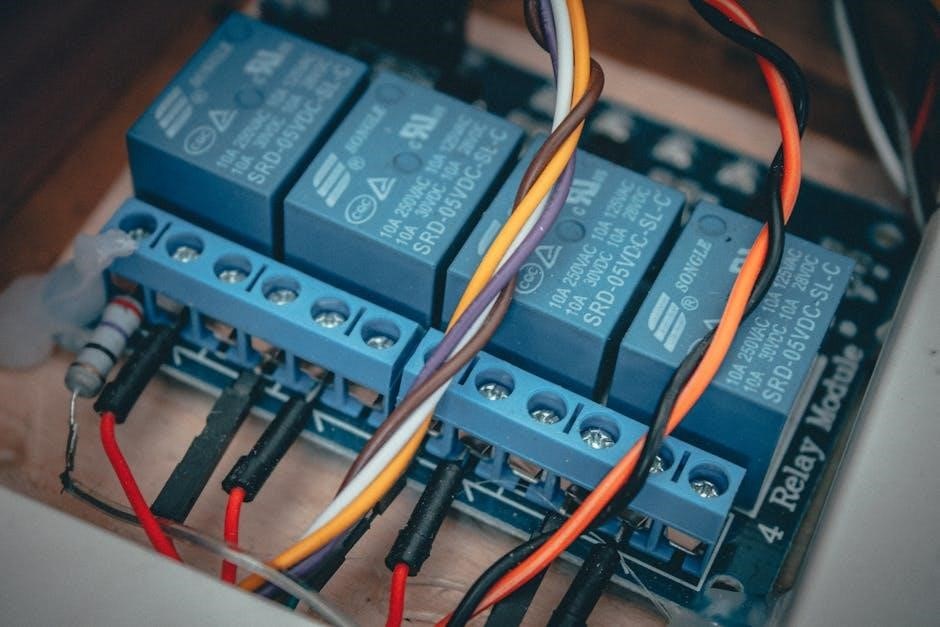
Wiring safety relays involves integrating them into the control circuit, typically utilizing the pressure switch’s output signals as inputs. The diagram will illustrate the correct wiring configuration, ensuring the relay interrupts power to the compressor motor upon detecting a fault condition.
Regular testing of safety relays is vital to confirm their functionality. Adhering to relevant safety standards and manufacturer recommendations, alongside the wiring diagram, guarantees a robust and reliable safety system, protecting both personnel and equipment.
Remote Monitoring and Control
Leveraging modern technology, remote monitoring and control systems significantly enhance the operational efficiency of your 3-phase air compressor, guided by the 3 Phase Air Compressor Pressure Switch Wiring Diagram. These systems allow for real-time data acquisition, including pressure levels, motor current, and switch status, accessible from anywhere with an internet connection.
Implementation typically involves integrating Programmable Logic Controllers (PLCs) or dedicated monitoring devices into the compressor’s control circuit. The wiring diagram will detail the necessary connections for data transmission and remote control commands.
Benefits include proactive maintenance scheduling based on performance data, remote start/stop capabilities, and immediate alerts in case of system failures, minimizing downtime and optimizing resource allocation. Secure communication protocols are crucial for data integrity and system security.