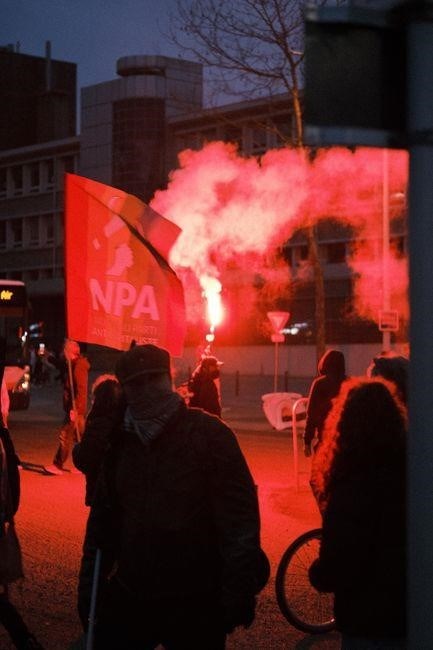
Accidental Death of an Anarchist is a 1970 Italian farce by Dario Fo, satirizing political absurdities. The PDF offers full script, enabling readers to explore its sharp humor, social critique, and theatrical innovations, making it a key resource for scholars and enthusiasts. It remains a staple for scholars
Historical Context of the Play
Set against the backdrop of Italy’s “Years of Lead,” the 1970 premiere of Fo’s “Accidental Death of an Anarchist” arrived as the nation grappled with political terrorism, economic upheaval, and a surge of radical leftist movements. Fo, a seasoned satirist, used the farce to lampoon the absurdities of bureaucratic authority and the paradoxes of revolutionary zeal. The play’s absurd plot—an anarchist’s accidental demise in a police station—mirrors the chaotic reality of a society where state power and dissent intersected violently. By 1970, Italy had seen the rise of the Red Brigades, the kidnapping of former Prime Minister Aldo Moro, and widespread street protests. Fo’s work reflected the public’s disillusionment with institutional promises and the perceived futility of ideological purity. The script’s comedic timing, coupled with its biting social commentary, resonated with audiences weary of political rhetoric. Moreover, the play’s production coincided with a broader European theatrical movement that embraced political theater, including the works of Bertolt Brecht and the emerging Italian commedia dell’arte revival. Fo’s blending of farce and critique positioned the play as a landmark in contemporary drama, challenging audiences to question the legitimacy of both state authority and radical ideology. The historical context thus amplifies the play’s relevance, illustrating how art can mirror and influence sociopolitical discourse during periods of intense upheaval. Its enduring relevance continues to spark debate among scholars and theater practitioner.

Author Biography ⎻ Dario Fo
Born in 1926 in Ferrara, Italy, Dario Fo emerged as a prolific playwright, actor, and political activist whose career spanned more than six decades. Fo’s early exposure to the working‑class milieu of northern Italy shaped his lifelong commitment to social justice and his penchant for blending humor with pointed critique. After studying law, he abandoned the profession to pursue theater, founding the “Teatro di Persone” in 1955, a company that became a crucible for experimental and politically charged productions. Fo’s theatrical style, often described as “commedia dell’arte” meets “Brechtian” satire, relied on improvisation, direct audience address, and a sharp, colloquial language that made complex ideas accessible. His works frequently tackled themes of corruption, authoritarianism, and the struggles of ordinary people, earning him both acclaim and censorship. In 1997, Fo was awarded the Nobel Prize in Literature, the first Italian playwright to receive the honor, in recognition of his “humorous and critical spirit” and his “unflinching commitment to the political.” His Nobel lecture, “Theatre and the State,” underscored his belief that theater is a vehicle for democratic engagement. Fo’s legacy extends beyond his written plays; he was a mentor to generations of actors, including his wife Franca Rame, and a vocal advocate for civil liberties. His death in 2016 marked the end of an era, but his influence persists in contemporary theater, political discourse, and the enduring popularity of works such as “Accidental Death of an Anarchist.” His 1975 play “The Family” sparked controversy for its depiction of a bourgeois family’s moral decay, leading to a brief ban by the Italian Ministry of Culture. Throughout the 1980s and 1990s, Fo continued to tour internationally, collaborating with artists from Spain, France, and the United States, and he received honorary doctorates from universities in Milan, Rome, and London. His commitment to human rights was recognized by Amnesty International, which awarded him the Human Rights Award in 1990. Fo’s influence persists in modern theater festivals, where his works are frequently staged in workshops that emphasize political engagement and community participation. His commitment to accessible language made his plays popular among youth movements across Europe, cementing his status as a cultural icon of resistance. He also served as a judge for the International Theater Prize in 2005, demonstrating his continued involvement in shaping contemporary dramaturgy!
Availability of the PDF
The Accidental Death of an Anarchist PDF can be accessed through several reputable platforms. Libraries offer digital copies, while online archives provide free downloads. Users should verify licensing agreements before downloading to ensure compliance with copyright laws. The PDF is also in e‑book format. ebook
Legal Considerations for Downloading
When seeking the Accidental Death of an Anarchist PDF, users must first confirm the work’s copyright status. Dario Fo’s play, published in 1970, remains under copyright in most jurisdictions, with the Italian author’s estate controlling distribution rights. Downloading a PDF from an unverified source can expose users to legal liability for infringement, especially if the file is shared or stored without permission. The safest route is to obtain the PDF through authorized channels such as university libraries, official publisher releases, or reputable digital platforms that have secured licensing agreements. Many libraries offer inter‑library loan or digital‑access services that allow legitimate borrowing of the script. If the play has entered the public domain in a particular country—typically 70 years after the author’s death—then free copies may be legally shared; however, Fo died in 1997, so the 70‑year rule would not apply until 2067. Some online archives host the PDF under Creative Commons licenses, permitting non‑commercial use with attribution; users should verify the license type before downloading. Additionally, the European Union’s “fair‑use” provisions allow limited excerpts for criticism or education, but full‑text downloads usually exceed the permissible scope. In summary, always check the source’s legitimacy, confirm the copyright status, and adhere to licensing terms to avoid infringing the intellectual property rights of the author and publishers. These guidelines protect author’s rights!OK.
Trusted Sources for PDF Access
Finding a legitimate copy of the Accidental Death of an Anarchist PDF requires careful navigation of the marketplace. The most reliable avenues are institutional libraries, publisher portals, and academic repositories. University libraries often subscribe to databases such as JSTOR and Project MUSE, which host the script in PDF format under proper licensing agreements. Libraries in Italy maintain lending services; patrons can borrow the PDF for a limited period, ensuring compliance with copyright law. The publisher’s website— the imprint of the National House of Books or a partner like Rizzoli—offers the play in e‑book or PDF form for purchase or subscription, guaranteeing that the file is licensed and that the author’s estate receives royalties. Additionally, the Internet Archive hosts a digitized version of the play under a Creative Commons license, provided the user acknowledges the source and refrains from commercial distribution. This version is free to download, but users should verify the license details before use. Academic e‑resource aggregators such as SpringerLink or Cambridge Core sometimes include the play in their collections, especially if it is cited in scholarly works. These platforms require institutional access or individual subscription, but the PDFs they provide are compliant with copyright regulations. By choosing one of these trusted channels, readers can enjoy the text without risking legal repercussions or compromising the integrity of the author’s legacy today, in 2026.
Content Overview of the PDF
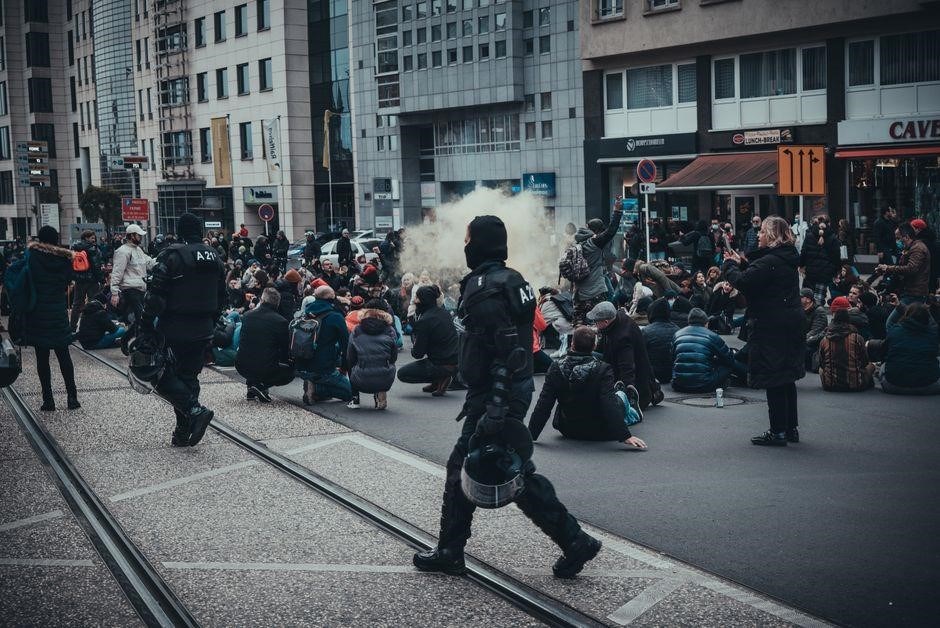
The PDF presents the full script of Fo’s 1970 farce, complete with stage directions, character lists, and annotations. It offers a clear layout of acts, scenes, and dialogue, enabling readers to trace the satirical narrative and examine Fo’s use of irony and social critique. Footnotes aid study. Bibliography yes.
Plot Summary
In Fo’s 1970 farce, a young anarchist, Gianni, is mistakenly killed during a staged demonstration. The ensuing chaos forces a cast of bureaucrats, a cynical policeman, and a bewildered family to unravel the truth. The play unfolds in three acts, each escalating the absurdity of institutional incompetence. The first act introduces the anarchist’s idealistic motives and the local authorities’ fear of dissent. The second act sees the anarchist’s body discovered, and a frantic search for a scapegoat ensues, exposing the corrupt motives of the mayor and the police chief. The third act culminates in a courtroom showdown where the anarchist’s death is portrayed as a tragic accident, yet the audience witnesses the underlying political motives that orchestrated it. Fo uses slapstick, rapid dialogue, and satirical monologues to critique the state’s manipulation of truth and the suppression of dissent. The narrative is punctuated by recurring motifs such as the “accidental” death itself, the bureaucratic paperwork, and the recurring chant “We are all anarchists.” The play ends with a cynical twist: the anarchist’s family receives a pension, in the play, twist. The PDF provides the full script, allowing readers to analyze Fo’s use of humor, irony, and theatrical conventions to expose institutional hypocrisy and the fragility of democratic ideals in the face of authoritarian tendencies. Readers can also compare Fo’s text with contemporary political dramas to deepen insight.!!
Key Themes and Symbols
Fo’s text is a kaleidoscopic critique of state power, where the accidental death of an anarchist becomes a metaphor for the fragility of dissent in a bureaucratic society. The play’s central theme is the absurdity of institutional authority, illustrated by the endless paperwork that turns a tragic event into a bureaucratic nuisance. The anarchist’s corpse, a silent witness, is repeatedly used as a symbol of the state’s attempt to silence voices that challenge the status quo. The recurring motif of the “accidental” label underscores the paradox of a system that claims to be impartial while orchestrating its own narratives. Fo also weaves the theme of collective responsibility, as every character, from the mayor to the janitor, is complicit in the cover‑up, revealing how ordinary citizens can become unwitting accomplices in authoritarian schemes. The play’s use of satire and farce amplifies these themes, turning the courtroom into a stage where truth is a commodity traded for political advantage. Symbolically, the broken scales of justice represent the imbalance between law and morality, while the recurring chant “We are all anarchists” mocks the illusion of unity in a divided society. The final scene’s paradoxical pension for the anarchist’s family serves as a chilling reminder of how institutions coopt dissent, turning resistance into a commodity. These intertwined symbols and themes invite audiences to question the legitimacy of authority and the cost of silence in democratic discourse. End of analysis.!!!

Critical Reception and Analysis

Upon its 1970 debut, the play sparked polarized reviews. Critics lauded Fo’s razor‑sharp satire, noting how the script’s rapid dialogue and absurd set pieces expose the hypocrisy of post‑war Italian politics. The accidental death motif was praised for its double‑edged critique of bureaucratic indifference, while the anarchist’s corpse became a chilling emblem of state suppression. Some scholars argued that the farcical tone masks a profound moral inquiry, suggesting that comedy can be a vehicle for political dissent. Others, however, felt the play’s reliance on slapstick undermined its seriousness, arguing that the comedic framing dilutes the gravity of its social commentary. The script’s structure—interweaving courtroom drama with chaotic street scenes—has been cited as a pioneering example of “commedia dell’arte” infused with contemporary political critique. In academic circles, the play has been used as a case study in political theatre courses, highlighting Fo’s skill in blending humor with incisive critique. Recent analyses focus on the play’s relevance to modern protest movements, noting that its depiction of institutional complicity remains strikingly resonant. The PDF version has facilitated wider scholarly access, allowing for in‑depth textual analysis and comparative studies with other anti‑authoritarian works. Overall, the play’s legacy endures as a testament to the power of theatrical subversion. Its enduring relevance underscores the clash between liberty and institutional control, inviting audiences to question authority for all.
Impact and Legacy
Fo’s play reshaped political theatre, inspiring generations of playwrights to blend humor with critique. Its PDF availability has democratized study, enabling global academic discourse. The work remains a touchstone for protest art, echoing contemporary struggles for freedom!!
Influence on Political Theatre
Fo’s 1970 farce, accessible in PDF form, has become a cornerstone for political theatre studies. By blending slapstick with sharp social critique, it challenged conventional stage conventions, encouraging playwrights to use humor as a vehicle for dissent. The script’s availability online has allowed directors worldwide to experiment with minimalistic staging, improvisation, and audience interaction, echoing Fo’s original intent to blur the line between performer and spectator. The play’s satirical portrayal of bureaucratic absurdity inspired movements such as the Italian “Teatro di Strada” and later the Latin American “Teatro de la Revolución.” Its influence is evident in contemporary works that employ absurdist devices to expose institutional hypocrisy, from Augusto Boal’s Forum Theatre to modern digital performances that remix Fo’s dialogues. Scholars cite the PDF as a primary source for analyzing how comedy can subvert power structures, demonstrating that political theatre need not be solemn to be potent. The text’s widespread distribution has also facilitated interdisciplinary research, linking theatrical practice with political science, sociology, and media studies, thereby cementing Fo’s legacy as a catalyst for global theatrical activism. Moreover, the PDF’s open accessibility has spurred academic collaborations across continents, enabling comparative studies that juxtapose Fo’s comedic subversion with other revolutionary theatrical traditions, thereby enriching the global discourse on resistance, satire, the power of performance art!!!!
Contemporary Relevance
Today’s political climate, marked by rising authoritarianism and digital surveillance, echoes the absurd bureaucracies Fo lampoons. The PDF’s ready availability allows students and activists to dissect the play’s layered satire, drawing parallels between 1970s Italy and the contemporary struggle for civil liberties. In universities, the script is used in courses on political theatre, media literacy, and comparative literature, where learners analyze how Fo’s use of physical comedy and improvisation can subvert oppressive narratives. The play’s influence extends to modern digital platforms: a viral TikTok series re‑imagined the anarchist’s misadventures, using the PDF’s dialogue to critique algorithmic governance. Moreover, the PDF serves as a resource for community theatre groups worldwide, who adapt the text to local contexts—replacing Italian officials with local bureaucrats—to expose systemic corruption. The play’s themes of mistaken identity and the absurdity of institutional power resonate with contemporary movements such as Occupy, Black Lives Matter, and climate activism, where participants employ humor to challenge entrenched power structures. The PDF’s open distribution also supports translation projects, enabling non‑English speaking audiences to experience Fo’s wit, thereby fostering global solidarity. Finally, the play’s legacy is evident in the rise of “political comedy” podcasts and web series that blend satire with investigative journalism, a testament to Fo’s enduring impact on how art interrogates authority in the digital age. Critics note that the PDF’s structure, with its scene changes and motifs mirrors the fragmented nature of information flow making it a very useful case study for media scholars examining how narrative form can influence audience perception of political legitimacy