
Ryobi 2800 PSI Pressure Washer Manual: A Comprehensive Guide (Updated 05/03/2026)

This manual provides detailed guidance for the Ryobi RY802800 2800 PSI pressure washer, offering repair help, parts diagrams, and instructional videos via eReplacementParts.com.
The Ryobi 2800 PSI pressure washer, specifically the RY802800 model, is a powerful cleaning tool designed for a variety of outdoor tasks. From washing vehicles and siding to preparing surfaces for staining or painting, this pressure washer delivers effective results. This comprehensive manual serves as your guide to safely and efficiently operate, maintain, and troubleshoot your Ryobi unit.
Understanding your pressure washer’s capabilities and limitations is crucial for optimal performance and longevity. eReplacementParts.com offers a wealth of resources, including detailed model diagrams and OEM parts lists, to assist you throughout the lifespan of your machine. This manual, updated as of today, May 3rd, 2026, aims to provide clear, concise instructions, ensuring you can tackle any cleaning challenge with confidence. We will cover everything from initial setup to advanced maintenance procedures.
Understanding the RY802800 Model
The Ryobi RY802800 is a 2900 PSI (rated) pressure washer, designed for homeowner use, offering a balance of power and convenience. It’s crucial to recognize this model’s specifications for appropriate application. eReplacementParts.com highlights its robust construction and readily available replacement parts, ensuring long-term usability.
This model features a powerful engine and a tri-axial pump, delivering consistent cleaning performance. Familiarizing yourself with the unit’s components – from the high-pressure hose to the various nozzle attachments – is essential. Understanding the specific parts list, available through resources like eReplacementParts.com, will simplify future repairs and maintenance. Properly utilizing the RY802800 requires understanding its pressure output and selecting the correct nozzle for each cleaning task, maximizing efficiency and preventing damage.
Safety Precautions and Warnings
Prioritize safety when operating the Ryobi RY802800 pressure washer. Always wear safety glasses to protect your eyes from debris. Avoid directing the high-pressure spray at people, animals, or electrical connections – this can cause severe injury or damage.
Never modify the pressure washer in any way, as this could compromise its safety features. Ensure a stable footing while operating the machine, and be mindful of the recoil force from the spray wand. Disconnect the power source and water supply before performing any maintenance or repairs. Review the complete manual for detailed safety guidelines. Ignoring these precautions can lead to serious accidents; responsible operation is paramount.
Component Identification: A Detailed Overview
The Ryobi RY802800 pressure washer comprises several key components. These include the high-pressure pump, responsible for generating the water pressure; the engine, providing the power source; and the spray gun with adjustable nozzles for varying spray patterns.
Essential parts also encompass the high-pressure hose, connecting the pump to the spray gun, and the detergent tank for applying cleaning solutions. eReplacementParts.com offers detailed diagrams illustrating each component’s location and function. Familiarizing yourself with these parts is crucial for proper assembly, maintenance, and troubleshooting. Understanding the interplay between these elements ensures efficient and safe operation of your pressure washer.
Nozzle Types and Their Applications
The Ryobi RY802800 pressure washer utilizes various nozzle types for diverse cleaning tasks. A 0-degree nozzle delivers a concentrated, powerful stream ideal for stubborn dirt and grime, but requires caution to avoid damage. The 15-degree nozzle offers a narrower spray for focused cleaning on surfaces like concrete.
A 25-degree nozzle provides a wider spray pattern suitable for general cleaning, while the 40-degree nozzle is best for delicate surfaces; The soap nozzle creates a low-pressure, foamy spray for applying detergents. Selecting the appropriate nozzle is vital for effective cleaning and preventing surface damage. Always refer to the manual for recommended nozzle usage for specific applications.
Hose and Wand Assembly

Proper assembly of the high-pressure hose and wand is crucial for safe and effective operation of the Ryobi RY802800. Begin by securely connecting the hose to the pressure washer pump outlet, ensuring a tight, leak-proof fit. Next, attach the wand to the hose, again verifying a secure connection.
Always inspect the hose for any signs of damage, such as cracks or abrasions, before each use. A damaged hose can burst under pressure, posing a safety hazard. The wand typically features a quick-connect mechanism for easy nozzle attachment. Ensure all connections are properly locked before starting the pressure washer to prevent accidental disconnection during operation.
Initial Setup and Preparation
Before the first use of your Ryobi RY802800, careful setup is essential. Unpack the pressure washer and verify all components are present, referencing the component identification section of this manual. Attach the desired nozzle to the wand, ensuring it clicks securely into place. Connect the high-pressure hose to both the pump and the wand, tightening all connections firmly.
Inspect the water inlet screen for debris and clean if necessary. Position the pressure washer on a stable, level surface. Familiarize yourself with all controls and safety features before proceeding. A pre-use inspection will help ensure optimal performance and longevity of your Ryobi pressure washer.
Water Source Connection
Connecting to a water source is a crucial step for operating your Ryobi RY802800. Ensure the water supply provides at least 20 PSI and a flow rate of 2.5 gallons per minute. Attach a garden hose to the water inlet on the pressure washer, using hose clamps for a secure fit.
Before turning on the water, check the inlet screen for obstructions. Fully open the water supply valve. The pressure washer is designed to draw water automatically; however, it may require a brief period to prime. Never operate the unit without water, as this can cause severe damage to the pump.
Power Connection and Grounding
Proper electrical connection and grounding are essential for safe operation of the Ryobi RY802800. This pressure washer requires a 120V, 60Hz power supply. Always use a grounded outlet and extension cord suitable for outdoor use. Ensure the extension cord is at least 16 gauge.
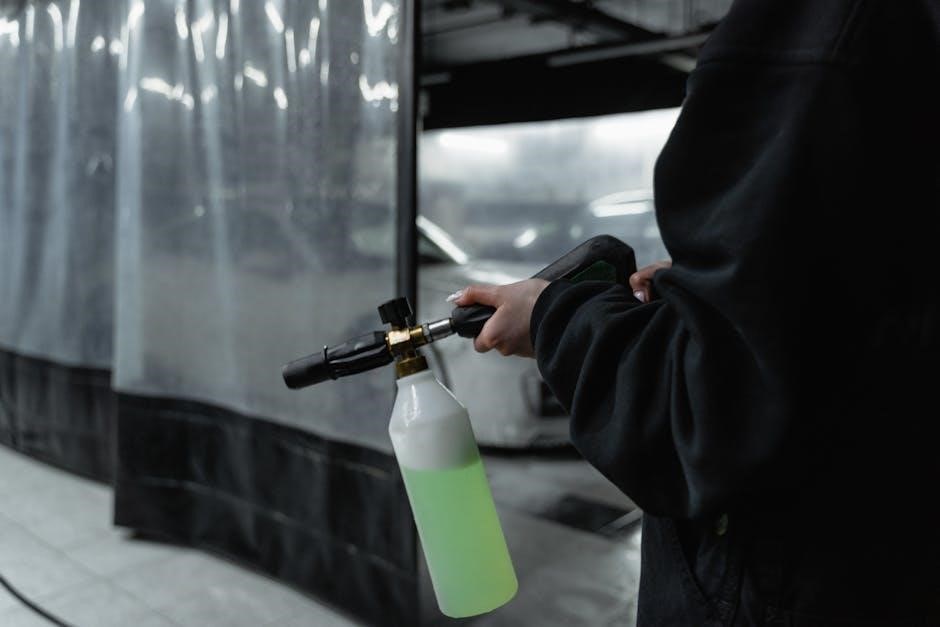
Avoid using multiple extension cords. Before connecting, inspect the power cord for damage. If damaged, do not use the pressure washer. Grounding provides a path for electrical current in case of a fault, reducing the risk of electric shock. Never remove the grounding prong from the plug.
Operating Instructions: Step-by-Step Guide

Before starting, ensure all connections are secure: water supply, hose, and spray wand. Turn on the water supply fully. Connect the power cord to a grounded outlet. Turn the power switch to the “ON” position. Pull the trigger on the spray gun to release pressure and prime the pump.
Once primed, the engine should start. Select the desired nozzle for your cleaning task. Begin spraying at a safe distance, testing the pressure on an inconspicuous area first. Move the wand in a consistent, sweeping motion. Release the trigger to stop spraying. Always turn off the power and water when finished.
Starting the Pressure Washer
Prior to starting, verify the unit is on a level surface and all connections are firmly in place – water supply, high-pressure hose, and spray wand. Ensure the trigger is released. Turn the power switch to the “ON” position; you may hear the pump engage.
If the engine doesn’t start immediately, allow a brief cooling period before attempting again. Pull the starter cord firmly and smoothly. Once running, allow the pressure washer to run for a few moments to fully prime the pump before engaging the spray trigger. Always observe safety precautions during operation.
Adjusting Pressure Settings
The Ryobi 2800 PSI pressure washer features adjustable pressure settings, typically controlled via quick-connect nozzles. These nozzles determine the spray pattern and intensity. Lower pressure settings, achieved with wider angle nozzles, are ideal for delicate surfaces like painted wood or vehicles.
Higher pressure settings, using narrower nozzles, are suitable for tougher jobs like concrete cleaning. Always start with the lowest pressure setting and gradually increase it as needed, testing on an inconspicuous area first. Avoid excessive pressure that could damage the surface being cleaned. Refer to the nozzle guide for appropriate applications.

Proper Spraying Techniques
Effective cleaning with your Ryobi 2800 PSI pressure washer relies on proper technique. Maintain a consistent distance from the surface – generally 8-12 inches – and use sweeping motions. Avoid holding the nozzle too close, which can cause damage. Overlapping each pass slightly ensures complete coverage.

Work from top to bottom to prevent streaking. For stubborn dirt, angle the spray slightly. Always test a small, hidden area first to assess the pressure’s effect. Remember to use appropriate nozzles for different surfaces, and wear safety glasses to protect your eyes from debris.
Maintenance and Troubleshooting
Regular maintenance extends the life of your Ryobi 2800 PSI pressure washer. After each use, flush the pump with clean water to remove detergent residue. Inspect the hose for cracks or leaks, and store it properly. Periodically check the oil level (if applicable) and replace it as needed.
Common issues, like low pressure or engine failure, can often be resolved with simple troubleshooting; eReplacementParts.com offers symptom-based repair help and diagrams. Always disconnect the power source before performing any maintenance. Refer to the warranty information for authorized repair services if needed.
Cleaning and Storing the Pressure Washer
Proper cleaning and storage are crucial for maintaining your Ryobi 2800 PSI pressure washer’s performance. After each use, rinse the exterior with a mild detergent and water, avoiding direct spray on the motor or electrical components. Flush the pump with clean water to prevent clogging from detergent buildup.
Before long-term storage, drain all water from the pump, hose, and wand to prevent freezing damage. Store the unit in a clean, dry location, protected from extreme temperatures and direct sunlight. Ensure all connections are secure and the power cord is neatly coiled.

Nozzle Cleaning and Maintenance
Maintaining clean nozzles is vital for optimal pressure washer performance. Over time, nozzles can become clogged with mineral deposits or debris, reducing spray effectiveness; Regularly inspect each nozzle for blockages, and use a nozzle cleaning tool or a thin wire to carefully clear any obstructions.
Avoid using abrasive materials that could damage the nozzle orifice. For stubborn clogs, soaking the nozzle in vinegar or a descaling solution can help dissolve buildup. Always rinse thoroughly with water before reattaching. Proper nozzle maintenance ensures consistent cleaning power and extends the life of your Ryobi 2800 PSI pressure washer.
Common Issues and Solutions (Based on eReplacementParts.com)
Based on resources from eReplacementParts.com, several common issues can arise with the Ryobi 2800 PSI pressure washer. These include low pressure, often caused by clogged nozzles or a faulty pressure regulator. If the engine won’t start, check the fuel level, spark plug, and air filter.
A pulsating spray can indicate air in the system; ensure all connections are tight. For more complex problems, eReplacementParts.com offers detailed diagrams, troubleshooting guides, and instructional videos to assist with diagnosis and repair, helping you restore your pressure washer to peak performance.
Low Pressure Troubleshooting
Experiencing low pressure with your Ryobi 2800 PSI pressure washer? Begin by inspecting the nozzle for clogs – a common culprit. Remove and clean it thoroughly. Next, verify the water supply is adequate; a restricted inlet will reduce pressure. Check the high-pressure hose for kinks or damage, as these impede water flow.
Furthermore, examine the pressure regulator and ensure it’s functioning correctly. If issues persist, consult eReplacementParts.com for detailed diagrams and potential replacement parts. A faulty pump or unloader valve could also be the cause, requiring professional attention or component replacement.
Engine Won’t Start Troubleshooting
If your Ryobi 2800 PSI pressure washer engine fails to start, first confirm sufficient fuel in the tank and check the fuel shut-off valve is open. Inspect the spark plug for fouling or damage; cleaning or replacing it may resolve the issue. Ensure the engine switch is in the “on” position and the choke is properly engaged for cold starts.
Low oil levels can also prevent starting – verify the oil level and add if necessary. For persistent problems, eReplacementParts.com offers diagnostic resources and parts diagrams. A malfunctioning recoil starter or carburetor might require professional repair or component replacement.
Ryobi OEM Parts and Repair Resources (eReplacementParts.com)
For authentic Ryobi replacement parts for your RY802800 2800 PSI pressure washer, eReplacementParts.com is a comprehensive resource. They provide detailed, exploded-view diagrams to help identify the exact component needed for repairs, ensuring compatibility and proper fit.
Beyond parts, eReplacementParts.com offers symptom-based repair assistance, instructional videos, and troubleshooting guides. This empowers both DIY enthusiasts and professionals to efficiently diagnose and resolve issues. Access to genuine OEM parts minimizes downtime and maintains the performance of your Ryobi pressure washer, extending its lifespan.

Warranty Information and Support
Ryobi pressure washers, including the 2800 PSI RY802800 model, are backed by a manufacturer’s warranty, offering peace of mind against defects in materials and workmanship. Specific warranty terms and duration vary, so reviewing the original purchase documentation is crucial.
For warranty claims and support, customers should contact Ryobi directly through their official website or customer service channels. Retaining proof of purchase, such as a receipt or invoice, is essential for processing any warranty requests. Additionally, online resources like eReplacementParts.com may offer supplementary support, but official warranty service is handled directly by Ryobi.
Technical Specifications: RY802800
The Ryobi RY802800 pressure washer boasts a powerful 2800 PSI maximum pressure, delivering robust cleaning capabilities for various outdoor surfaces. It features a flow rate of 2.3 GPM (gallons per minute), balancing power with water efficiency.
This model is typically powered by a gasoline engine, offering portability without reliance on electrical outlets. Key specifications include a 2900 PSI rating as noted on eReplacementParts.com, and a durable construction designed for frequent use. Further details regarding engine displacement, weight, and dimensions can be found in the official Ryobi product documentation and online resources.