
Harrington Hoist Manual: A Comprehensive Guide
Harrington hoist manuals offer crucial guidance for operation, maintenance, and safety, covering various models like the SNER, CF, and LB series.
Ace Industries provides OEM parts, ensuring compatibility and precision for Harrington hoist equipment, including the AH Mini-Cat air hoist, with detailed parts diagrams available;
Harrington Hoists have established a strong reputation for reliability and durability within the lifting industry, serving diverse applications across manufacturing, construction, and maintenance sectors. Understanding the intricacies of these hoists, however, necessitates access to comprehensive documentation. Harrington hoist manuals are essential resources, providing detailed instructions on safe operation, routine maintenance, and troubleshooting procedures.
These manuals cover a broad spectrum of hoist types, including electric chain hoists (like the SNER series), manual chain hoists (CF series), lever hoists (LB series), and air hoists (AH Mini-Cat). Accessing the correct manual is paramount for ensuring optimal performance and longevity of the equipment. Ace Industries emphasizes the importance of OEM parts, aligning with the precision detailed within these official guides. Proper utilization of the manual, coupled with genuine replacement parts, guarantees safe and efficient lifting operations.
Understanding Hoist Types
Harrington Hoists offer a diverse range of lifting solutions, each suited for specific operational needs. Electric chain hoists (SNER series) provide powered lifting, ideal for repetitive tasks and heavier loads, while manual chain hoists (CF series) offer portability and operation without an external power source. Lever hoists (LB series) excel in applications requiring precise positioning and controlled lowering, and air hoists (AH Mini-Cat) deliver efficient lifting in hazardous environments.
Harrington hoist manuals detail the unique characteristics of each type, outlining safety precautions, load capacities, and maintenance schedules. Understanding these distinctions is crucial for selecting the appropriate hoist for a given task. Ace Industries supports this understanding by providing OEM parts specifically designed for each model, ensuring compatibility and adherence to manufacturer specifications as detailed in the official documentation. Proper selection and informed operation, guided by the manual, maximize safety and efficiency.
Harrington Hoist Components & Parts
Harrington hoist components, detailed in manuals, include chains, hooks, and motors; Ace Industries supplies OEM parts for reliable replacements and repairs.
Chain Hoist Components
Chain hoists, fundamental in lifting operations, comprise several key components detailed within Harrington hoist manuals; The core element is the lifting chain itself, available in various types and sizes, crucial for capacity and lift height. Hooks, both top and bottom, are essential connection points, requiring regular inspection for wear or deformation.
The handwheel or electric motor provides the power to lift and lower loads, while the gear train translates this power into mechanical advantage. A robust load wheel guides the chain, and the frame provides structural support. Bearings ensure smooth operation, and cotters and pins secure critical connections.
Ace Industries offers a comprehensive range of replacement parts for these components, including OEM options, guaranteeing compatibility and performance. Proper maintenance, as outlined in the manuals, is vital for extending the lifespan of these parts and ensuring safe operation.
Electric Chain Hoist Components
Electric chain hoists, detailed in Harrington hoist manuals (specifically the SNER series), build upon standard chain hoist components with added electrical elements. Key components include the electric motor, providing powered lifting and lowering, and the control pendant for operator control. A robust gearbox translates motor power to the lifting chain.
Like manual hoists, they feature lifting chains, hooks, and a load wheel, but also incorporate a brake system for secure load holding. Electrical components like the transformer and wiring are vital for operation. Limit switches prevent over-raising or lowering.
Ace Industries supplies OEM replacement parts for these complex systems. Harrington Hoists, Inc. manuals provide detailed parts information. Regular inspection of electrical components, as outlined in the manuals, is crucial for safety and performance.
Air Hoist Components
Air hoists, such as the AH Mini-Cat series covered in Harrington hoist manuals, utilize compressed air for power. Core components include the air motor, converting air pressure into mechanical force, and the control system regulating airflow. Like other hoist types, they feature lifting chains, hooks, and a load wheel for lifting operations.
Unique to air hoists is the air supply line and filter, ensuring clean, dry air reaches the motor. A governor regulates motor speed, and a brake provides secure load holding. Harrington Hoists, Inc. manuals detail these parts.
Ace Industries offers replacement parts, including hairpin cotters and bearings (as seen in the AH Mini-Cat spare parts list). Regular maintenance, guided by the manuals, focuses on air system integrity and component lubrication for optimal performance and safety.
Lever Hoist Components
Lever hoists, detailed in Harrington hoist manuals like those for the LB Series, operate using a hand-operated lever, providing mechanical advantage for lifting. Key components include the lifting chain, which engages with a geared mechanism, and the robust housing protecting internal parts.
The lever itself is central, transmitting force to the lifting chain. Top and bottom hooks are crucial for secure load attachment, and a load wheel guides the chain. Harrington Hoists, Inc. manuals emphasize the importance of inspecting these components.
Optional parts, as noted in LB Series documentation, can include specialized hook configurations. Ace Industries provides replacement parts to maintain functionality. Manuals guide users through disassembly and reassembly, highlighting the importance of proper lubrication and regular inspection for safe operation.
Manuals and Documentation

Harrington hoist manuals, including those for SNER, CF, and LB series, are essential resources. They provide instructions, parts diagrams, and safety guidelines for optimal performance.
Locating Harrington Hoist Manuals
Finding the correct Harrington hoist manual is vital for safe and efficient operation. While Harrington Hoists, Inc. directly provides documentation, several avenues exist for locating these essential resources. Owners manuals encompass instructions and detailed parts information for a diverse range of hoist types, including electric chain hoists (SNER series), manual chain hoists (CF series), and lever-operated chain hoists (LB series).
Often, a targeted online search using the hoist’s model number (e.g., CF4, L5) coupled with “manual” or “documentation” yields results. Ace Industries, a supplier of Harrington parts, implicitly supports access to relevant documentation through its parts offerings and diagrams. Checking with the original equipment supplier or a reputable Harrington hoist distributor can also prove fruitful. Remember to always prioritize using the manual specifically designed for your hoist model to ensure accurate guidance and safety protocols are followed.
Electric Chain Hoist (SNER Series) Manuals
Harrington SNER series electric chain hoist manuals are comprehensive resources covering models ranging from 1/4 ton to 3 ton capacity. These manuals provide detailed instructions on installation, operation, maintenance, and troubleshooting specific to these electrically powered hoists. They include crucial safety precautions, wiring diagrams, and parts lists essential for proper functionality and longevity.
The SNER manuals detail procedures for inspecting the hoist, addressing motor problems, and understanding brake mechanisms. They emphasize the importance of regular maintenance, including lubrication and chain inspection. Accessing the correct manual ensures users understand the hoist’s capabilities and limitations, promoting safe lifting practices. These documents are vital for technicians performing repairs or replacements, referencing specific part numbers and assembly instructions. Proper utilization of the SNER manual guarantees optimal performance and minimizes potential hazards.
Manual Chain Hoist (CF Series) Manuals
Harrington CF series manual chain hoist manuals provide essential guidance for the safe and efficient operation of these hand-powered lifting devices, specifically the CF4 model. These manuals detail the hoist’s construction, operating procedures, and maintenance requirements, ensuring users understand its capabilities and limitations. They emphasize proper lifting techniques and safety precautions to prevent accidents and ensure a long service life.
The CF series manuals include detailed parts diagrams, illustrating components like the top and bottom hooks, load chain, and handwheel assembly. They outline inspection procedures for identifying wear and tear, and provide instructions for replacing damaged parts. Understanding the manual is crucial for technicians performing repairs or routine maintenance. Proper adherence to the guidelines within the manual guarantees optimal performance and minimizes the risk of mechanical failure, promoting a safe working environment.
Lever Operated Chain Hoist (LB Series) Manuals
Harrington LB series lever operated chain hoist manuals are vital resources for understanding the operation, maintenance, and safety protocols of these versatile lifting tools, specifically the L5 model. These comprehensive guides detail the hoist’s mechanics, including the lever action and chain mechanism, ensuring users can operate it effectively and safely. They emphasize the importance of regular inspections and proper lubrication to maintain optimal performance.
The manuals include detailed diagrams illustrating the hoist’s components, such as the top and bottom hook assemblies, the lever, and the load chain. They provide clear instructions for assembly, operation, and troubleshooting common issues. Furthermore, the manuals highlight optional parts available for customization or repair. Adhering to the guidelines within the LB series manual is crucial for preventing accidents, extending the hoist’s lifespan, and ensuring a safe lifting operation.
Parts & Replacements
Harrington hoist parts, including OEM and aftermarket options, are readily available from suppliers like Ace Industries, ensuring compatibility and extending equipment life.
Sourcing Harrington Hoist Parts
Finding replacement parts for Harrington hoists requires a strategic approach to ensure both compatibility and quality. Ace Industries stands out as a reliable source, offering a comprehensive range of Harrington hoist parts, catering to diverse models and needs. When seeking parts, consider both Original Equipment Manufacturer (OEM) options and aftermarket alternatives.
OEM parts, directly from Harrington, guarantee a precise fit and adherence to original specifications, maximizing performance and longevity. However, these often come at a premium price. Aftermarket parts can provide a cost-effective solution, but verifying the manufacturer’s reputation and quality control standards is crucial. Online marketplaces and specialized industrial supply companies also offer parts, but thorough research is essential.
Always have the hoist’s model number and specific part details readily available when ordering to avoid errors and delays. Consulting the Harrington hoist manual is invaluable for identifying the correct part numbers and understanding the assembly process. Prioritizing reputable suppliers and verifying part compatibility will ensure a successful repair and minimize downtime.
OEM vs. Aftermarket Parts
Choosing between Original Equipment Manufacturer (OEM) and aftermarket parts for your Harrington hoist is a critical decision impacting performance and cost. OEM parts, sourced directly from Harrington, are engineered to the exact original specifications, guaranteeing a perfect fit and optimal functionality. This precision often translates to increased durability and reliability, minimizing potential issues down the line.
However, OEM parts typically command a higher price point; Aftermarket parts, produced by third-party manufacturers, offer a more budget-friendly alternative. While potentially cost-effective, quality can vary significantly. It’s vital to select reputable aftermarket suppliers with robust quality control processes.
Consider the application and criticality of the part. For essential components like load hooks or braking systems, OEM parts are often the preferred choice. For less critical items, a well-vetted aftermarket part may suffice. Always consult your Harrington hoist manual for recommended part specifications and compatibility information before making a purchase.
Recommended Spare Parts (AH Mini-Cat Air Hoist)
Maintaining an inventory of essential spare parts for your AH Mini-Cat Air Hoist minimizes downtime and ensures continued operational efficiency. Based on general use recommendations (EDOC0164), key components to keep on hand include Hair Pin Cotters (AH130790008) – vital for securing connections – and Parallel Pins (AH130406017), crucial for various assembly points.
Furthermore, proactively stocking Bearings (9001208) is advisable, as these are subject to wear and tear with regular use. Regularly inspect these parts and replace them as needed to prevent unexpected failures. Having these readily available allows for swift repairs, reducing costly interruptions to your workflow.
Refer to your Harrington hoist manual for a complete parts list and exploded diagrams. Prioritize parts based on usage frequency and potential failure points. Consistent maintenance and a well-stocked spare parts kit are essential for maximizing the lifespan and reliability of your air hoist.
Specific Part Numbers (AH-250C/500C/250P/M/500P/M)
When ordering replacement parts for your AH Mini-Cat Air Hoist, referencing the correct part number is critical for ensuring compatibility. For the AH-250C and AH-500C models, the Hair Pin Cotter utilizes part number AH130790008. Both models also share the same Parallel Pin, identified as AH130406017.
Similarly, the AH-250P/M and AH-500P/M models utilize the same part numbers for these components: AH130790008 for the Hair Pin Cotter and AH130406017 for the Parallel Pin. Bearings for all four models (AH-250C, AH-500C, AH-250P/M, and AH-500P/M) are designated as 9001208.
Always consult your Harrington Hoist manual or a reliable parts supplier to verify the correct part number before placing an order. Using the precise part number guarantees a proper fit and optimal performance, maintaining the safety and efficiency of your air hoist.
Maintenance & Safety
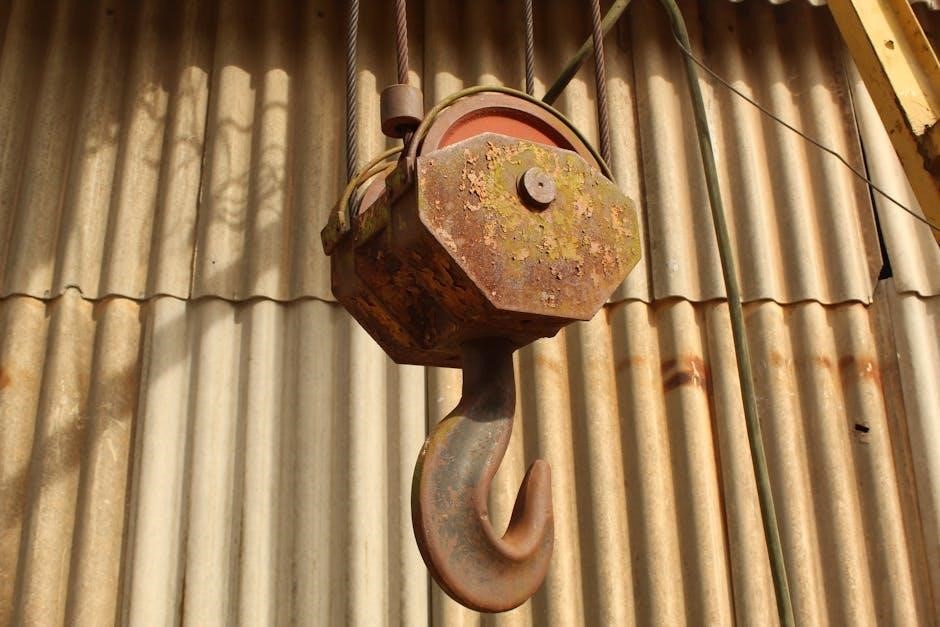
Regular inspections, proper lubrication, and diligent chain and hook maintenance are vital for Harrington hoist safety and longevity, as outlined in manuals.
Regular Inspection Procedures
Harrington hoist manuals emphasize consistent, thorough inspections to guarantee operational safety and prevent unexpected failures. These procedures should be incorporated into a routine maintenance schedule, performed by trained personnel. Inspect the hoist chain for wear, damage, or distortion – look for stretched links, corrosion, or any signs of kinking.
Hooks require careful examination for cracks, deformation, or wear at the saddle. Ensure the hook latch functions correctly and securely closes. Check all fasteners, including bolts and nuts, to confirm they are tightened to the manufacturer’s specifications.

Electric hoists necessitate inspection of the electrical components, wiring, and controls. Verify proper motor operation and brake functionality. Air hoists require checking the air supply lines for leaks and ensuring adequate air pressure. Document all inspection findings and address any identified issues promptly to maintain a safe working environment.
Lubrication Guidelines
Harrington hoist manuals detail specific lubrication requirements to ensure smooth operation and extend the lifespan of the equipment. Regular lubrication minimizes friction, reduces wear, and prevents corrosion. The chain is a critical component; apply a high-quality chain lubricant specifically designed for lifting applications, ensuring complete coverage of all links.
Hooks should be lubricated at the pivot points to maintain free movement. Bearings, found in electric and air hoist models, require periodic greasing with a suitable bearing grease. Consult the manual for the recommended grease type and frequency.
Gearboxes in electric hoists necessitate regular oil changes, following the manufacturer’s specified oil grade and interval. Avoid over-lubrication, as excess lubricant can attract dirt and debris. Always wipe away any excess lubricant after application to maintain a clean and safe working environment, referencing the parts diagram when needed.
Chain Inspection and Maintenance
Harrington hoist manuals emphasize the importance of frequent chain inspections. Regularly examine the chain for wear, damage, and distortion. Look for stretched links, cracked or broken welds, and signs of corrosion. Any damaged chain must be replaced immediately to prevent catastrophic failure.
Keep the chain properly lubricated with a high-quality chain lubricant designed for lifting applications. This reduces friction, minimizes wear, and prevents corrosion. Ensure complete coverage of all chain links during lubrication.
Clean the chain periodically to remove dirt, grease, and other contaminants. Avoid abrasive cleaning methods that could damage the chain’s surface. Refer to the parts diagram for proper chain assembly and replacement procedures, ensuring compatibility with your Harrington hoist model;
Hook Inspection and Replacement
Harrington hoist manuals detail critical hook inspection procedures. Regularly inspect hooks for cracks, deformation, and wear, paying close attention to the throat and point. Any hook exhibiting signs of damage, such as bending or twisting, must be removed from service immediately.
Check for elongation of the hook throat, which indicates stress and potential failure. Ensure the hook latch functions correctly and securely closes. A malfunctioning latch poses a significant safety hazard.
When replacing hooks, always use OEM parts from suppliers like Ace Industries to guarantee compatibility and maintain the hoist’s original lifting capacity. Consult the parts diagram within your hoist’s manual for the correct hook specification. Proper hook replacement is vital for safe operation of your Harrington hoist.

Troubleshooting Common Issues
Harrington hoist manuals address chain slippage, motor problems, air supply issues, and brake malfunctions, offering solutions for efficient repairs and continued safe operation.
Chain Slippage
Chain slippage in a Harrington hoist is a critical issue demanding immediate attention, as outlined in the comprehensive Harrington hoist manuals. This often indicates a problem within the hoist’s lifting mechanism, potentially stemming from insufficient chain tension or wear on the chain pockets or sprockets. Manuals emphasize the importance of regular chain inspection to identify worn or damaged links before slippage occurs.
Troubleshooting steps, detailed in the documentation, involve verifying proper chain lubrication and ensuring the hoist is not overloaded beyond its specified capacity. If slippage persists, the manuals advise inspecting the hoist’s brake system, as a malfunctioning brake can contribute to chain stress and subsequent slippage. Furthermore, the manuals highlight the necessity of using OEM parts from suppliers like Ace Industries when replacing chain components, guaranteeing compatibility and maintaining the hoist’s original performance standards. Ignoring chain slippage can lead to dropped loads and serious safety hazards, reinforcing the need for diligent maintenance and adherence to the manual’s guidelines;
Motor Problems (Electric Hoists)
Electric hoist manuals, specifically those for the SNER series, dedicate significant sections to troubleshooting motor problems. Common issues include overheating, unusual noises, or complete motor failure. The Harrington hoist manual stresses the importance of verifying proper voltage supply and checking for tripped circuit breakers as initial diagnostic steps.
Further investigation, as detailed in the documentation, involves inspecting the motor’s wiring for loose connections or damaged insulation. The manuals also advise checking the motor’s cooling fan to ensure it’s functioning correctly, preventing overheating. If the motor continues to malfunction, the manual recommends consulting a qualified electrician. Utilizing OEM parts, sourced from reputable suppliers, is crucial when replacing motor components, ensuring compatibility and maintaining the hoist’s safety features. Ignoring motor issues can lead to complete hoist failure and potential safety risks, emphasizing the need for prompt attention and adherence to the manual’s instructions.
Air Supply Issues (Air Hoists)
Harrington hoist manuals, particularly those for the AH Mini-Cat series, dedicate considerable attention to resolving air supply issues. Insufficient air pressure is a frequent problem, leading to reduced lifting capacity or complete hoist inoperability. The manual emphasizes verifying the air compressor’s output and ensuring the air supply line is free from leaks or obstructions.
Proper air filtration is also critical; the manual recommends regularly checking and replacing air filters to prevent contaminants from damaging the hoist’s pneumatic components. If the hoist operates intermittently, the manual suggests inspecting the air regulator for proper adjustment and functionality. Utilizing recommended spare parts, like those listed in the AH Mini-Cat documentation, ensures optimal performance. Ignoring air supply issues can compromise the hoist’s safety and efficiency, highlighting the importance of following the manual’s guidelines for maintenance and troubleshooting.
Brake Malfunctions
Harrington hoist manuals, covering models like the SNER electric chain hoist, dedicate significant sections to diagnosing and rectifying brake malfunctions. A common issue is brake slippage, often stemming from contamination or wear of the brake linings. The manual stresses the importance of regular inspection and replacement of these linings, referencing specific OEM parts for optimal performance.
Another potential problem is improper brake adjustment; the manual provides detailed instructions on how to correctly adjust the brake tension to ensure secure load holding. If the brake fails to release, the manual advises checking for obstructions or damage to the brake solenoid. Utilizing the parts diagrams within the manual aids in identifying and replacing faulty components. Addressing brake malfunctions promptly is crucial for maintaining hoist safety and preventing accidental load drops, as detailed in the Harrington Hoists, Inc. documentation.
Harrington Hoist Specifications
Harrington hoist manuals detail crucial specifications, including capacity ranges, lift heights, and compatible chain types & sizes, ensuring proper application and safety.
Capacity Ranges
Harrington hoist manuals meticulously outline the available capacity ranges for each hoist model, a critical factor in selecting the appropriate equipment for specific lifting tasks. The SNER series electric chain hoists, as detailed in their respective manuals, cover a broad spectrum, starting from 1/4 ton and extending up to 3 tons.
Understanding these ranges is paramount for safe and efficient operation. Exceeding the stated capacity can lead to equipment failure and potential hazards. The manuals provide clear guidance on determining the correct hoist based on the weight of the load. Furthermore, they often include detailed load charts and safety warnings related to capacity limitations.
Air hoists, like the AH Mini-Cat, also have defined capacity ranges, typically specified in tons. Manual chain hoists, such as the CF series, offer various capacities to suit diverse applications. Always consult the specific Harrington hoist manual for the exact capacity range of your model.
Lift Heights
Harrington hoist manuals comprehensively detail the standard and available lift heights for each hoist model, a crucial specification for matching the hoist to the application’s vertical requirements. These manuals specify that electric chain hoists, like the SNER series, offer a range of lift heights, often customizable to suit specific needs.
Determining the correct lift height is essential to ensure the load can be raised and lowered safely and efficiently. The manuals provide guidance on calculating the required lift height, considering factors like headroom and load dimensions.
Air hoists and manual chain hoists also feature varying lift height options. Harrington often provides options for extended lift chains or ropes to accommodate taller lifting requirements. Always refer to the specific Harrington hoist manual for precise lift height specifications and available customizations for your particular model, ensuring optimal performance and safety.
Chain Types & Sizes
Harrington hoist manuals meticulously outline the chain types and sizes utilized in their various hoist models, a critical aspect of hoist performance and safety. Electric chain hoists, such as the SNER series, typically employ high-strength alloy steel chains, with the manual specifying the exact grade and breaking strength.
Manual chain hoists (CF series) and lever hoists (LB series) also rely on robust chain construction, with manuals detailing the chain pitch and diameter. Understanding the chain specifications is vital for proper maintenance and replacement.
Harrington emphasizes using only approved chain replacements to maintain the hoist’s rated capacity. The manuals provide clear guidance on identifying the correct chain size and type, ensuring compatibility and preventing potential failures. Always consult the Harrington hoist manual for precise chain specifications and recommended replacement procedures.